Bathtub refinishing vs replacement comes down to one question: is your problem the surface, or is it the tub? Refinishing sprays a new coating onto the tub you already own, so it fixes what you can see and nothing behind it. Replacement pulls the tub out and opens the wet wall, which is plumbing work. Refinish when the tub is sound, the layout is staying, and the damage is cosmetic. Replace when the fixture is failing, the surround is going, or you want that alcove to become a walk-in shower.
There’s one more thing worth knowing before you call anybody in 2026. A federal rule now prohibits the commercial use of methylene chloride for chemical coating removal, and that date has already passed. It doesn’t make refinishing illegal. It does give you one fair question to ask a refinisher, and we’ll get to it below.
Bathtub refinishing vs replacement: what’s the real difference?
Refinishing changes the surface. Replacement changes the fixture, and usually the plumbing and the wall with it.
Refinishing, reglazing and resurfacing all describe the same category of work. The old surface gets prepped, a new coating goes on, and your tub never moves.
Replacement takes the tub out. That opens up the drain, the overflow, the valve and the wall behind them, which is why it costs what it costs and why it can fix things a coating can’t.
A liner is a third thing entirely. It’s a fitted shell set over the tub you have, so the original tub and anything trapped behind the shell stay right where they are.
The honest way to hold it: refinishing is a finish job, and a new bathtub installation is a plumbing job. Pick the one that matches your actual problem.
When is bathtub refinishing the right call in a Tampa Bay bathroom?
Refinishing is the right call when the tub is solid, the layout isn’t changing, and everything wrong with it is on the surface.
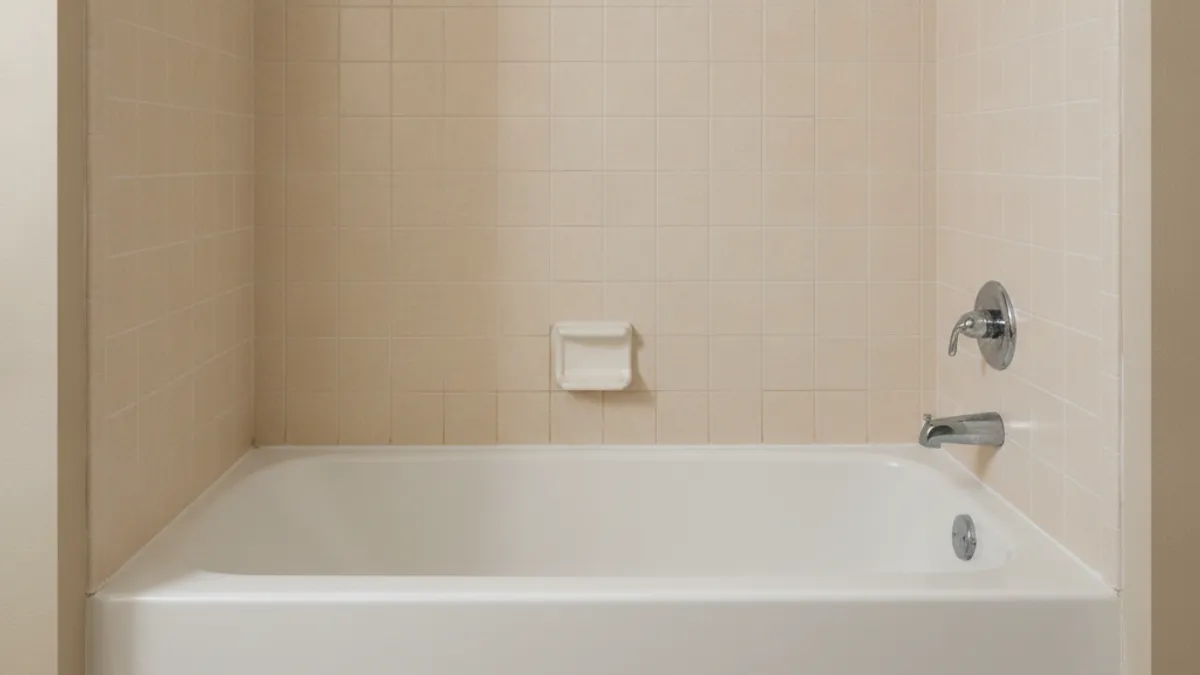
A sound cast iron or steel alcove tub is the classic candidate. Stains, scratches and a color nobody picks on purpose anymore are surface problems, and surface problems are what a coating is for.
The layout has to stay put, though. Refinishing won’t move a drain, change the tub’s shape, or lower the wall you step over.
That’s a common situation in older Tampa Bay houses. Our bathtub installation guide calls the 60-inch alcove tub the most common tub in 1950s to 1990s Tampa Bay concrete block homes, and a lot of those tubs are still structurally fine under an ugly finish.
Age alone doesn’t decide it. Get the tub floor, the drain, the overflow and the wall above it looked at separately before anyone quotes you a price.
Refinishing may fit when all of these are true:
- The tub feels solid underfoot.
- There are no cracks and no rust through the metal.
- The wet wall and surround are still sound.
- You want to keep this tub.
- No plumbing or layout change is planned.
- The only complaint is how the finish looks.
Change one of those answers and replacement deserves a second look.
When does replacing the tub beat refinishing it?
Replacement wins the moment the problem sits under the finish instead of on it.
Cracks or flex in the tub floor are a fixture problem. So is rust through at the drain or the overflow. A coating goes over a failing substrate and fails with it.
The same goes for the surround. Loose, cracked or leaking wall material is its own job, and refinishing the tub does nothing for the wall above it.
Then there’s fit. If the tub is the wrong size, the wrong shape, or too tall to step into comfortably, refinishing it just locks in the thing you didn’t like.
Plenty of Tampa Bay households would rather have the shower. That’s a tub-to-shower conversion, not a coating: the tub leaves, the wet area changes, and the plumbing scope changes with it.
And if a full bathroom remodel is already on the calendar, refinishing first is a project you’ll pay for twice.
What did the 2026 federal methylene chloride rule change about tub refinishing?
It banned the chemical, not the trade. After April 28, 2026, industrial and commercial use of methylene chloride for these coating-removal jobs is prohibited under federal rule.
Taking an old coating off a tub is chemical coating removal, and the rule defines that term broadly. 40 CFR 751.103 puts it this way:
“Paint and coating removal means application of a chemical or use of another method to remove, loosen, or deteriorate any paint, varnish, lacquer, graffiti, surface protectants, or other coating from a substrate, including objects, vehicles, architectural features, or structures.”
The deadline itself is in 40 CFR 751.107(b)(6):
“After April 28, 2026, all persons are prohibited from industrial or commercial use of methylene chloride, including any methylene chloride containing products, for the uses listed in paragraph (a)(2) of this section except for those uses specified in paragraphs (b)(7) through (9) of this section.”
The exceptions that paragraph points to are narrow: NASA emergency use, coating removal for wooden furniture and architectural fixtures of artistic, cultural or historic significance, and adhesives and sealants in aircraft and space vehicle applications. Your bathtub isn’t any of those.
The supply chain was closed earlier. Consumer paint and coating removal was prohibited after November 22, 2019, and retail distribution of methylene chloride for any use was prohibited after May 5, 2025. The EPA’s own summary of the rule says it prohibits the chemical for all consumer uses and for most industrial and commercial uses, including paint and coating removers.
Read that carefully, because it’s easy to get backwards. Refinishing is legal work, done every day. We’re not saying any shop in Tampa Bay uses methylene chloride, and none of this tells you anything about old stock, enforcement or penalties.
What it does give you is a fair question to ask. Get the product name and the safety data sheet in writing before anyone sprays a chemical in a closed bathroom in your house. Any shop working legitimately should be able to hand both over.
Does a refinished tub need a permit? Does a replacement?
Refinishing is a finish. Replacing the tub is plumbing. That’s usually where the permit answer splits, but it depends on your address and your scope.
The City of Tampa lists painting among the work that doesn’t require a building permit, regardless of what the work costs. A coating on an existing fixture sits on that side of the line.
Unincorporated Hillsborough County also lists painting among work it calls typically cosmetic and exempt. Its plumbing exemption is much tighter: it reaches the removal and reinstallation of water closets, and only when pipes and other fixtures aren’t replaced or rearranged.
A tub swap isn’t that. Still, don’t turn one county’s exemption list into a blanket Tampa Bay rule, because requirements change by jurisdiction and by exactly what’s being proposed.
Your contractor confirms it for your address before demo. If the job touches the valve, the drain or the waste-and-overflow, that’s bathroom plumbing work and the scope should say so in writing. Treat this page as general information, not a permit determination for your house.
What does each option cost in Tampa Bay?
We publish real numbers for replacement work and no number at all for refinishing, and that’s on purpose: this isn’t a service we match you with, so we have no measured local figure for it and won’t invent one.
Here’s what our bathtub installation cost guide publishes:
- Alcove tub install: $1,600 to $4,000.
- Freestanding acrylic tub install: $3,200 to $6,800.
- Cast iron freestanding tub install: $5,000 to $10,500, with the floor reinforcement when it applies.
- A new alcove tub with a tile surround, a new valve, a new waste-and-overflow and a glass door: $2,500 to $5,800 installed.
Don’t average those. Each band belongs to a different fixture and a different scope.
Going further costs more. Our tub-to-shower conversion guide puts a conversion with retile and new glass at $12,000 to $23,000, and our Tampa Bay bathroom remodel cost guide puts a mid-range full remodel at $24,000 to $42,000 and a powder room refresh at $5,000 to $10,500. None of those is a refinishing estimate.
When you do collect a refinishing quote, make it spell out four things: the prep method, the coating product, how long the tub has to cure before anyone uses it, and the warranty term in writing. Two quotes with those four lines filled in are comparable. Two quotes without them aren’t.
What about one-day tub liners and acrylic overlays?
A liner is a shell set over your existing tub. It covers the old surface instead of restoring it or removing it.
That’s different from both of the other options. Refinishing bonds a coating to the prepped tub. Replacement takes the tub out and exposes the wet area underneath.
The part worth thinking about is what stays. Whatever is behind that shell is still behind it, and the liner keeps the size, position and basic shape of the tub you already have.
If you want a different fixture, price a real install. If you want the tub gone, price a conversion.
Does the answer change in a Tampa Bay condo?
It can, and the difference is what each option touches. Refinishing stays inside your unit’s finishes, while pulling a tub can reach plumbing that serves other units.
Florida law counts easements through units for plumbing and other utility service among the common elements, along with installations that furnish utilities or services to more than one unit. That’s the shared stack, and it isn’t yours to move.
So a tub swap in a tower can turn into a board question in a way a coating doesn’t. Read our Tampa Bay condo bathroom remodel rules before you approve any demo, because your declaration is what draws the boundary.
Refinishing doesn’t get you out of the building’s rules either. Access, contractor requirements, ventilation and work hours are all still in your governing documents.
How do you decide in one pass?
Start with the tub itself, then ask whether you actually want to keep it.
- Is the tub solid, with no cracks, no flex and no rust through?
- Is the wet wall around it staying as is?
- Do you want this tub’s size, shape and step-over height?
- Is every drain, valve and fixture staying where it is?
- Is a bigger bathroom remodel already coming in the next few years?
Five yeses and refinishing is a fair call. One firm no, especially on the first or the third, and you’re better off replacing.
Tampa Bathroom Pro is a referral service. We match homeowners with licensed, insured local bathroom pros across Hillsborough, Pinellas and Pasco counties, and the pro pulls the permits the job needs. You contract and pay the contractor directly. Homeowners in Brandon and Carrollwood run the same five questions; the permitting office changes, the decision doesn’t.
Frequently asked questions
Is bathtub refinishing still legal in Tampa Bay?
Yes. Refinishing is legal work. What the federal rule prohibits after April 28, 2026 is the industrial and commercial use of methylene chloride for covered coating-removal jobs, not the trade.
Ask for the product name and the safety data sheet in writing. That keeps the conversation on the materials actually being used in your bathroom.
Are reglazing, resurfacing and refinishing different services?
They’re three names for the same category of surface work. The tub stays where it is while the surface gets prepped and coated.
A liner is different, because it adds a separate shell over the tub. Replacement is different again, because the tub leaves.
Can refinishing fix a cracked or flexing tub?
No. A coating can’t correct cracks, flex in the tub floor or rust through the metal, because those problems live under the finish.
Have the tub checked before you pay for a cosmetic fix. A failing substrate points at replacement.
Does replacing a bathtub always need a permit in Tampa Bay?
Not as a blanket rule. The City of Tampa and unincorporated Hillsborough County publish their own guidance, and their exemptions for cosmetic work and for plumbing work aren’t the same.
Your contractor confirms what your address and your scope require, before the work starts.
Should a condo owner refinish instead of replacing?
Refinishing touches fewer building systems, since the fixture never comes out. Replacement can reach plumbing that serves other units.
Your declaration still controls what you can do and who’s responsible for it. Read it and the association’s procedures before you schedule either job.
Who can help if replacement is the better choice?
We can match you with licensed, insured bathroom pros across Hillsborough, Pinellas and Pasco counties.
They can price a bathtub replacement, a tub-to-shower conversion, or a full remodel if that’s where this is heading.